



Why the steps matter
Every game of this kind is won by whoever sits at a screen the longest. Not this one.
Uranium has no mine
Fleet fuel comes from walking and from nothing else. Moving a fleet, spying or colonising costs Fuel, refined from uranium you walked for — so an attack is paid for with your legs, not with your free time.
Today's steps drive your mines
Iron and crystal accumulate while you are away, but at a rate your walking sets: 25% on a bad day, 100% at ten thousand steps, 150% at twenty.
A real ceiling on grinding
Nobody can walk forty hours a day. The economy balances itself, and a commander with a job can hold their own against one without.
How you start
Install the watch app
Free on the Garmin Connect IQ store.
Let it sync once
A homeworld is founded for you and the watch shows a seven-character code.
Enter the code here
Pick a commander name and you are in. No email needed to start.
Walk
Your mines speed up, uranium builds, and the first fleet becomes possible.
What your walking is worth
| Steps today | Mine output |
|---|---|
| Under 1 000 | 25% |
| 6 000 | 70% |
| 10 000 | 100% |
| 20 000 or more | 150% |
The floor never drops to zero. An illness or an injury costs you ground against your neighbours, not your empire.
On the watch, and on the web
The watch
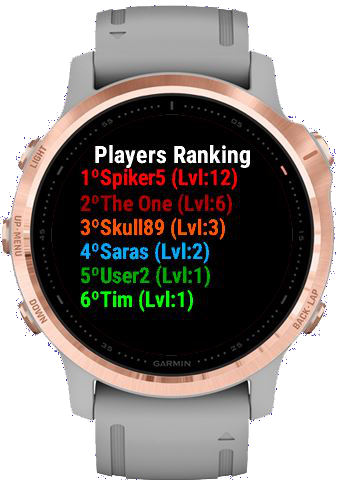
Resources, what is being built and how long is left, your step count and what it earned. And the one alert worth interrupting you for: an incoming attack, with Save Fleet on a single press.
The browser
The full command deck: buildings, the research tree, drydock, defences, the galaxy map, espionage reports and combat logs.
One universe, no resets
It does not restart. What you build stays built. And nobody can punch far below their weight: you may only attack commanders between a fifth and five times your points, so veterans never see you.